Engineering quality is mostly boring decisions
Good software is rarely the result of clever code. It comes from small, repeatable habits that keep a codebase easy to change for years.

Halavanja Dragan
Senior UIUX Designer at DEEQ
Ask developers what makes a codebase good and you will hear about architecture, frameworks and patterns. Ask the people who maintain a codebase five years later and the answer changes. They talk about whether they can find things, whether a change in one place breaks something unrelated, and whether they dare to deploy on a Friday.
Quality, in our experience, is made of boring decisions made consistently. Here are the ones we would defend.
Design every state a screen can be in
Most screens are designed in one state: loaded, full of data, working. Real people meet the others first. The list is empty on their first visit, the connection is slow on the train, the payment fails on the last step.
So before a screen is drawn, we write down every state it can be in. For anything that loads, that is at least four:
- Loading: what the person sees while they wait, and whether the layout holds still.
- Empty: what the screen says before there is anything in it, and what to do first.
- Failed: what went wrong, in words a person understands, and a way to try again.
- Done: the screen everyone designs, which is only one of the four.
Each state gets a design, and the product is built so that a screen is always in exactly one of them. That rules out a whole family of small, embarrassing bugs, such as an error message appearing beside a spinner that never stops. Nobody has to remember the awkward cases at the last minute, because they were decided before anyone built anything.
One name for one thing
A button style, a colour or a card is called the same thing in the design file, in the code and in conversation. Agreeing a name takes a few seconds, and it means the same thing is reused rather than quietly redrawn in three places with slightly different spacing, shades or spellings.
Build from a small set of parts
A product feels consistent when it is assembled from a few well-made parts: buttons, fields, cards and lists, each with a handful of agreed variations. A new screen should be mostly assembly, not invention.
This is as much a design rule as an engineering one. Every part is drawn once, built once and named the same in both places, and its variations are described in one place rather than improvised on the screen that first needed them. Each part does one job and is easy to find. That sounds like trivia, and it is, which is the point. Nobody should spend attention on where something lives.
What it pays for:
- A change to a button changes every button, so the product never drifts into five slightly different ones.
- Designers and developers discuss the problem, not which of two near-identical cards is the real one.
- New people find their way around in days, not weeks.
None of this is clever. All of it makes the next change cheaper.
Review for the reader, not the author
Code review is where a team's standards actually live. We try to keep reviews small and fast, because a change three thousand lines long does not get reviewed, it gets approved.
What we look for, roughly in order:
- 01Does it do what the ticket says, including the awkward cases?
- 02Will someone who has never seen this code understand it in six months?
- 03Is anything here a trap: a hidden dependency, a surprising default, a silent failure?
- 04Do the tests check what the person using it would notice?
Style is last, and mostly automated. Tools settle arguments about formatting, so humans can discuss the things that matter.
Test the things that hurt
We do not chase a coverage number. A high percentage tells you lines were executed, not that anything was verified. We choose tests by asking where a mistake would be expensive.
That usually means:
- Anything involving money, dates or permissions. These are cheap to check and costly to get wrong.
- The places where the product talks to another service, such as a payment provider, and what happens when that service is slow or says no.
- A short list of journeys that must never break, such as signing in, completing the core task and paying.
Everything else gets lighter coverage or none. A test suite that takes twenty minutes is a suite people stop running, and an unrun suite has no value.
Fix the flaky test or delete it
A test that fails one run in twenty teaches the team to ignore red. We treat flakiness as a bug in priority, and if we cannot fix it quickly we remove the test and write down the gap. Honest absence beats a misleading signal.
Make the slow path visible
Performance regressions almost never arrive as one dramatic change. They arrive as ten reasonable ones. So we measure before we optimise and keep the measurement around.
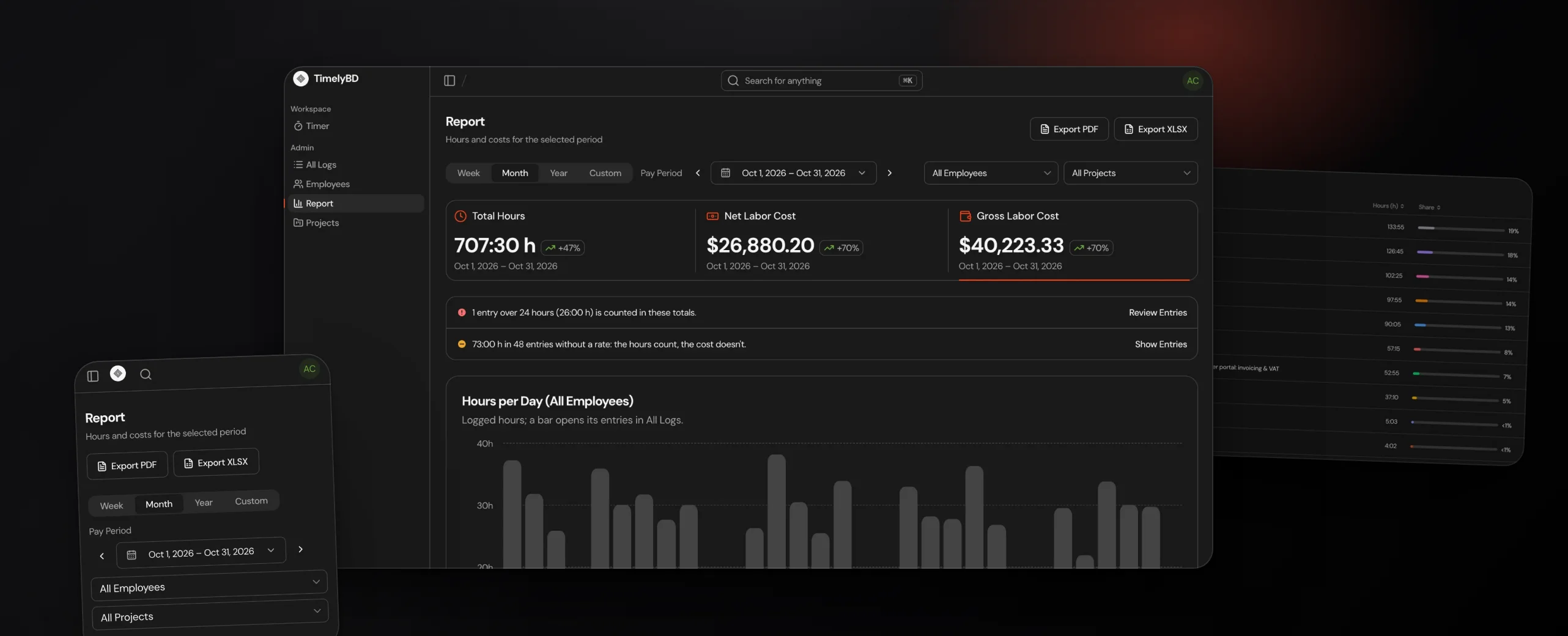
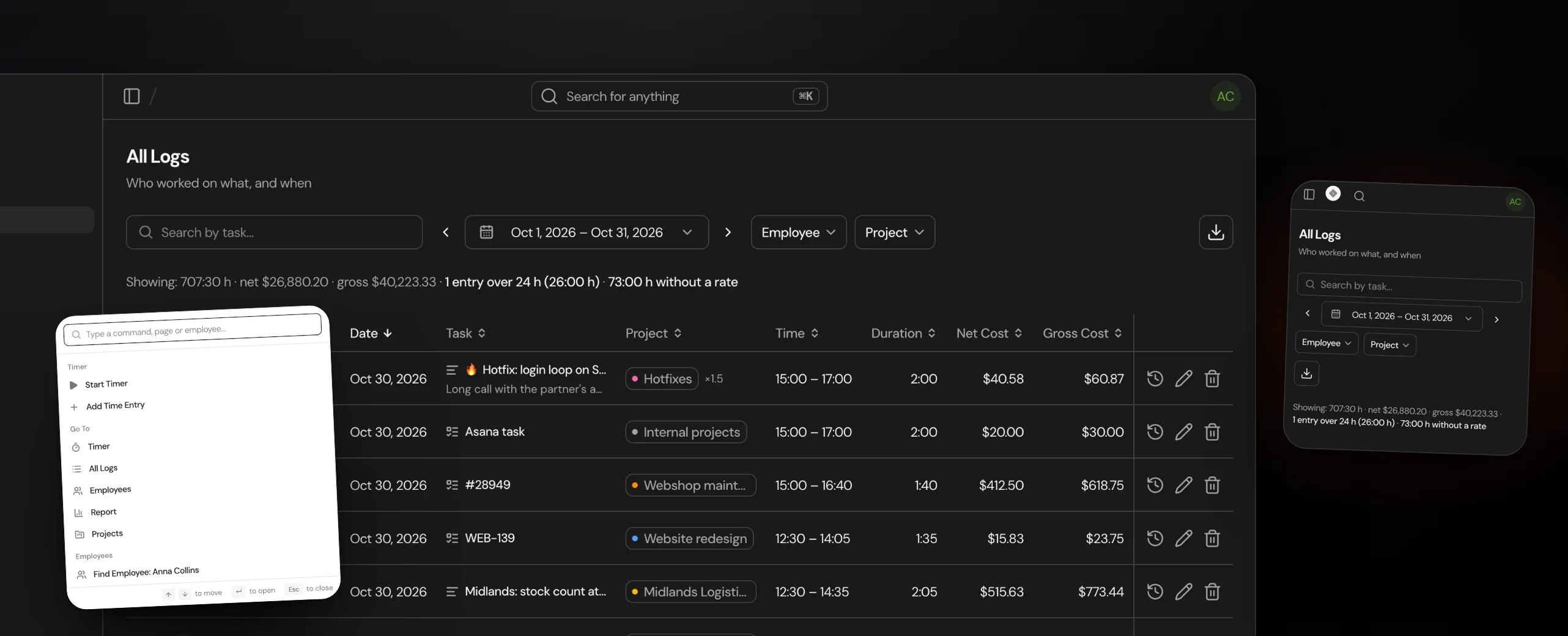
When we reworked how costs are calculated in our own time-tracking product, TimelyBD, the reason we trusted the result was that we had numbers from before. On a year of 75,794 entries, each calculation behind the reports dropped from roughly 200 to 330 milliseconds to 55 to 110 milliseconds. Without the baseline we would have had an opinion. With it, we had a fact, and a number to defend in future changes.
The practical rule: if you are about to make something faster, first write down how long it takes now.
Make setup and releases repeatable
Many outages are not logic errors but a missing setting or a build that only works on one laptop. We keep setup reproducible: one documented step to install, one to run, one to build. Every setting is listed with its purpose, and the application refuses to start if a required one is missing, rather than failing at three in the morning on first use.
Releases are small and frequent. A release with two changes is easy to reason about and easy to roll back. A release with two hundred is a gamble, however good the tests.
Leave notes for the next person
We write short comments explaining why, never what. The code already says what. A line such as "this runs twice on purpose, the first pass warms the cache the second pass reads" saves a future developer from tidying away something load-bearing.
For larger decisions we keep a brief decision log: what we chose, what we rejected and why. It takes minutes to write and answers the question every new team member eventually asks.
Where this leaves you
None of these practices is novel, and that is the argument. Teams rarely fail because they lacked a clever idea. They fail because the dull things, every state designed, one name for one thing, honest tests, small reviews, repeatable releases, slid for a few weeks and the cost compounded.
If you are choosing a studio or a team, ask how they design the empty and error states, what they test and how they release. The answers will tell you more than any portfolio. Quality you can rely on is a habit, and habits are visible if you know where to look.